
ACCESSORIES · LABELLING
Cable management &
Installation.
Enquire cable guidance and installation accessories for your PV system.
Whether roof, building or way to the inverter: Ask for guidance, protection and fastening of your PV lines at TP ENERGY. We will coordinate the appropriate design with you.
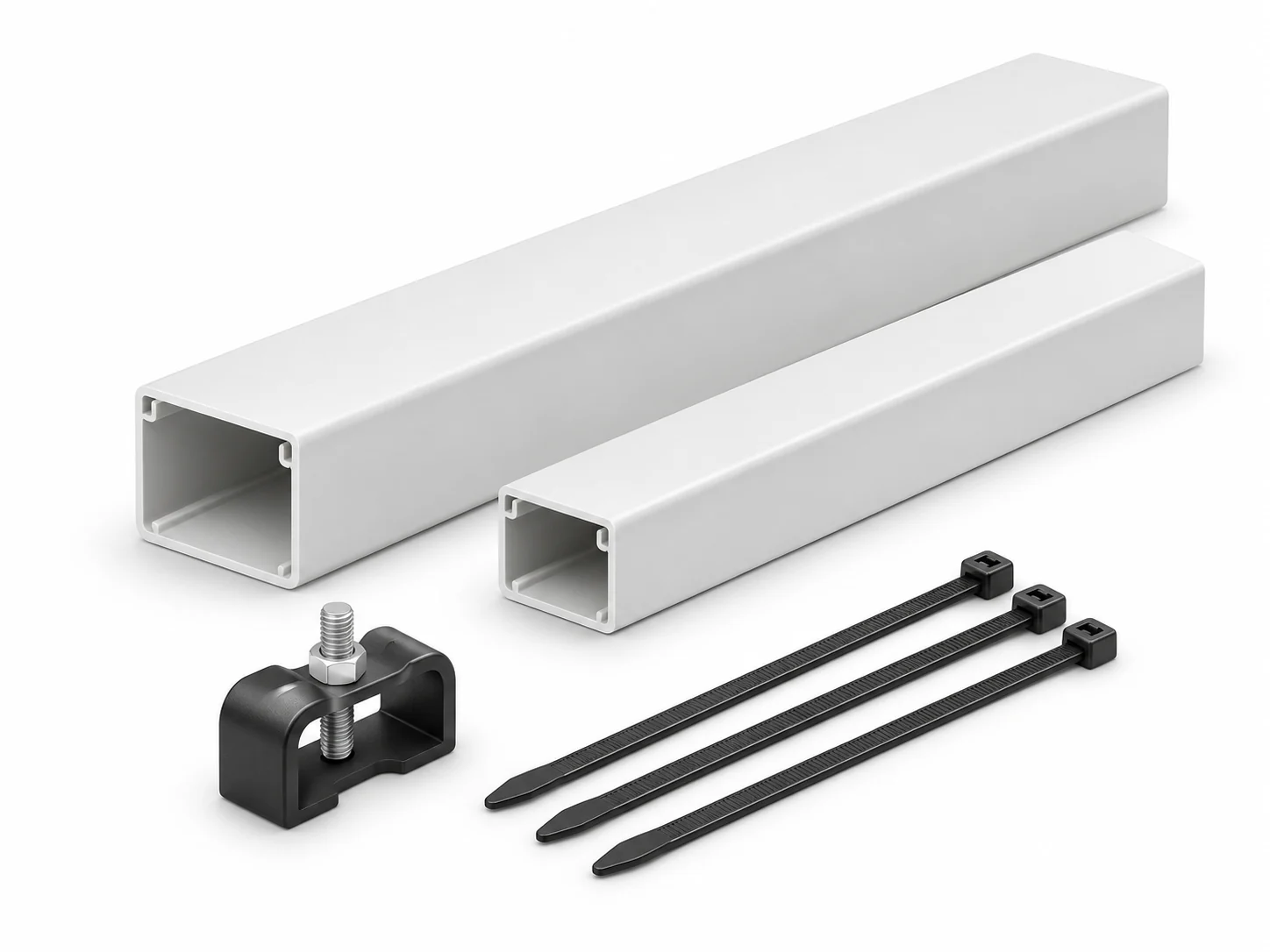
Your lead path. The right accessories.
Select the required accessory type. A click on the icon image opens the properties. About "Inquire your offer", please tell us your needs – we will clarify the exact execution together.
Lead and protect lines.
From the module field to the inverter: channels, channels and pipes take on different tasks. The execution depends on the line path, installation location and stress.
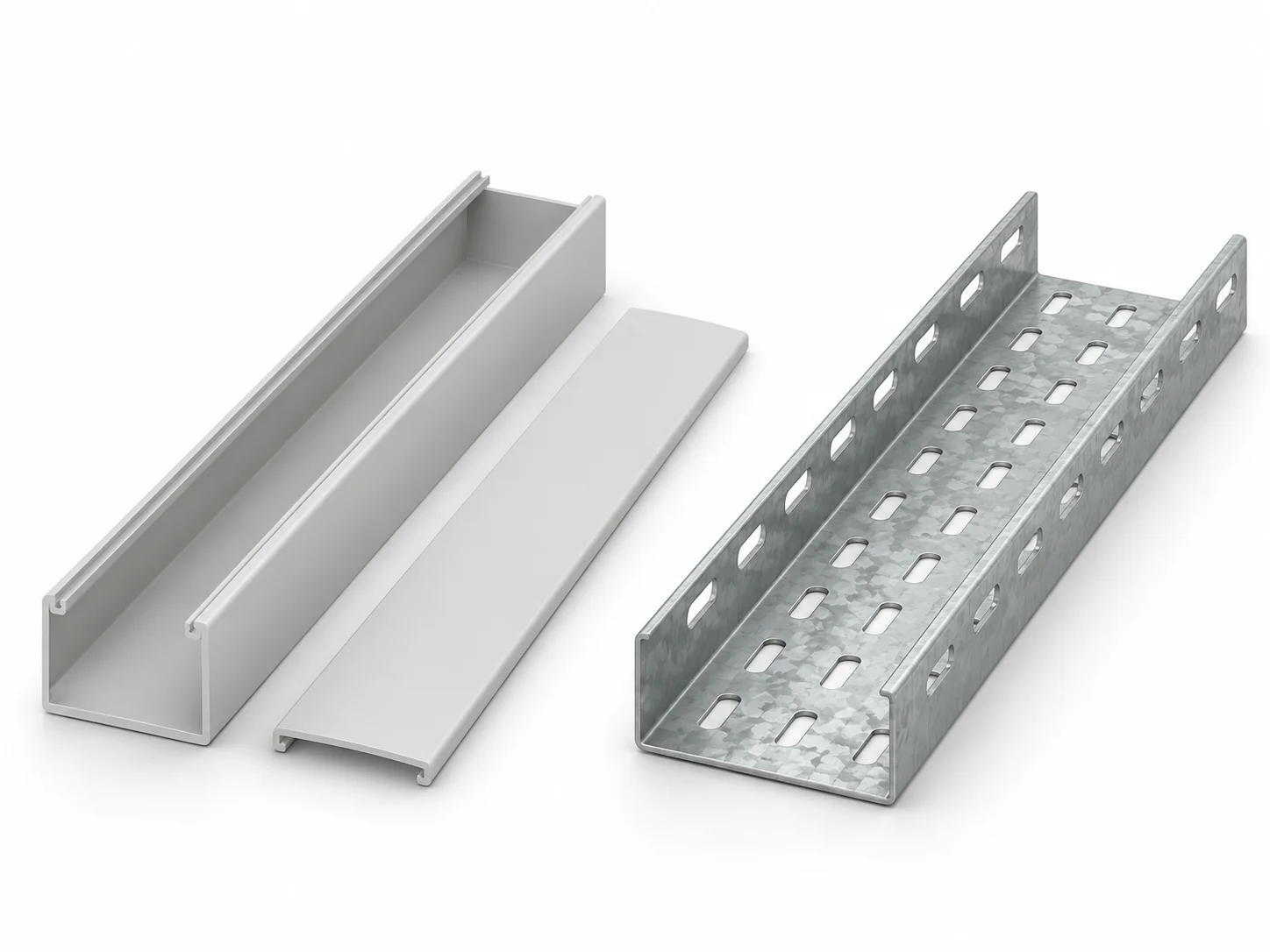
Cable ducts and cable channels
For common lines of your PV system. Ask for channels or channels with information about the route, cable scope and installation location.
Request a quote: Cable ducts and cable channels
Characteristics and use: Cable ducts and cable channels
Operation
Cable ducts take up cables in a profile that is mostly closed with a lid. Cable channels and lattice channels carry several lines on a common route. They are used, for example, for longer distances between the PV module field and the building.
Selection features
Width, height, occupancy and load capacity must match the cable circumference. Outside, material, corrosion protection and fastening also count. An open channel does not protect like a closed pipe; lids and brackets are selected to match the system and local stress.
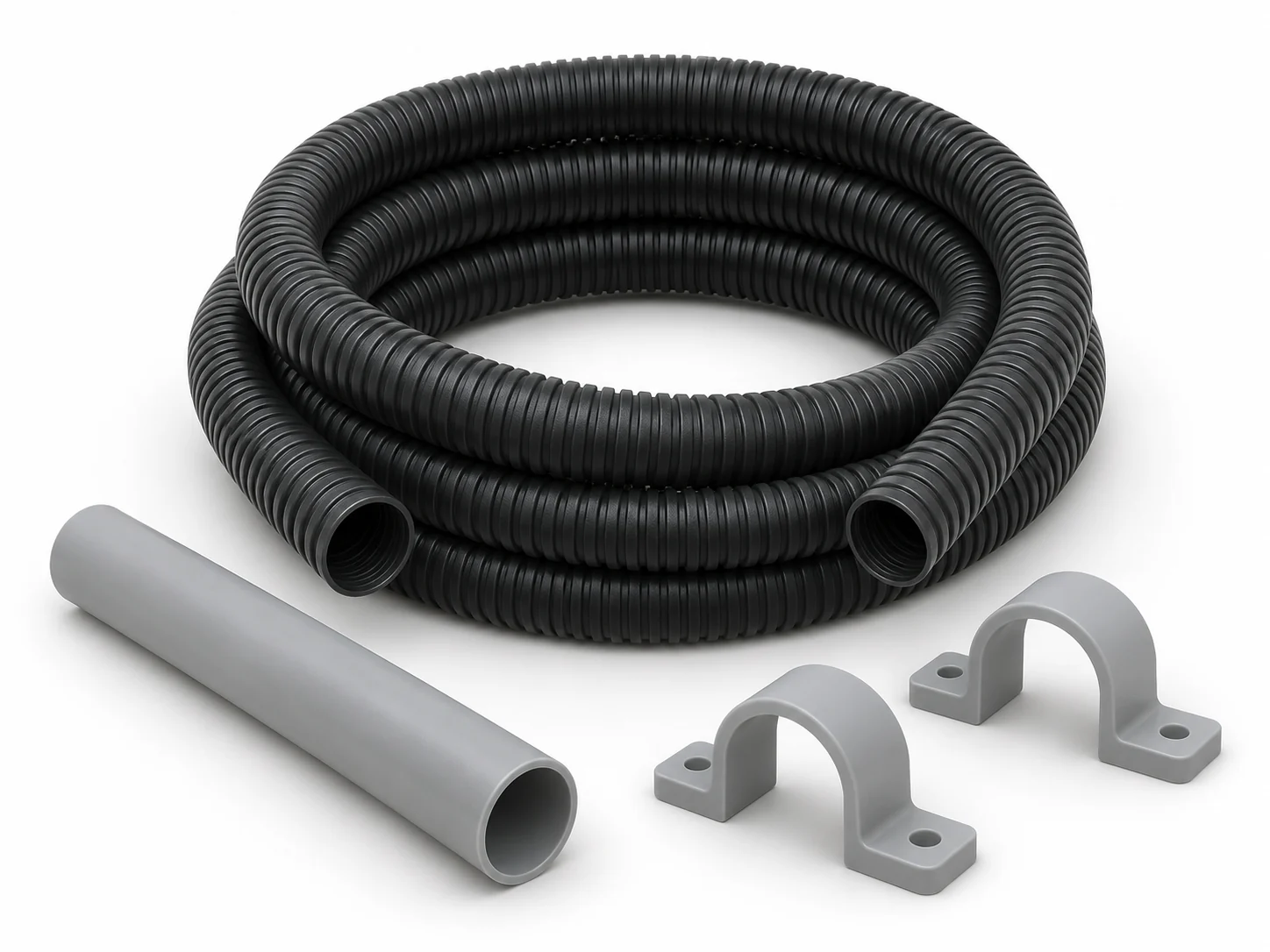
Protective pipes and pipe accessories
For guided lines and additional protection. Give us location, length and the lines to be taken in.
Request a quote: Protective pipes and pipe accessories
Characteristics and use: Protective pipes and pipe accessories
Operation
Rigid installation pipes and flexible corrugated pipes lead pipes and offer additional mechanical protection depending on the design. The pipe system includes suitable connectors, end pieces and fastenings. A corrugated pipe is not only suitable for every PV installation because of its shape.
Selection features
Important are usable internal diameters, line occupancy, bending radii as well as pressure and impact stress. For free weathering it requires a documented external and UV suitability. A possible earth transfer shall be examined separately; water and condensate in the pipeline shall also be taken into account in the planning.
Fasten and insert PV lines.
Clips and binders hold wires at the intended location. Fittings and fittings take over the transition into a housing. For this, different dimensions and properties are required.
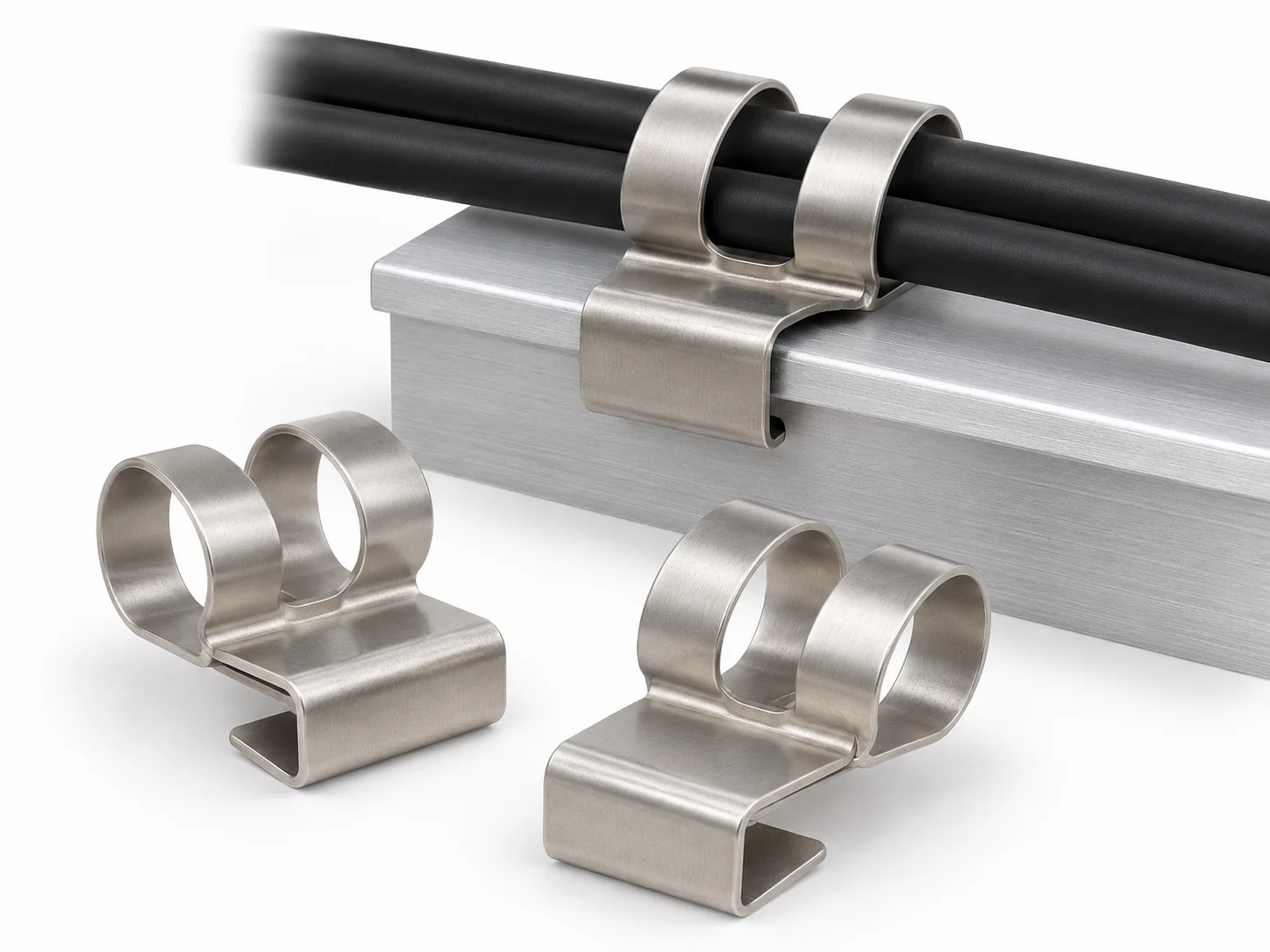
PV cable clips and edge holders
For cable routing on modular frames and suitable profiles. Photos of the mounting edge and cable diameter facilitate the assignment.
Request a quote: PV cable clips and edge holders
Characteristics and use: PV cable clips and edge holders
Operation
PV cable clips carry individual or several solar cables on the module frame or on suitable mounting profiles. Edge holders grab a suitable profile edge; other holders use intended mounting openings. The pipes are kept in order without lying loosely on the roof surface.
Selection features
Number of cables, outer cable diameter, profile shape and clamping area of the fastening must fit together. Smooth contact surfaces and a suitable clamping help to protect the cable sheath. Material and weather resistance are chosen for the installation location; the specifications of the module and assembly system remain decisive.
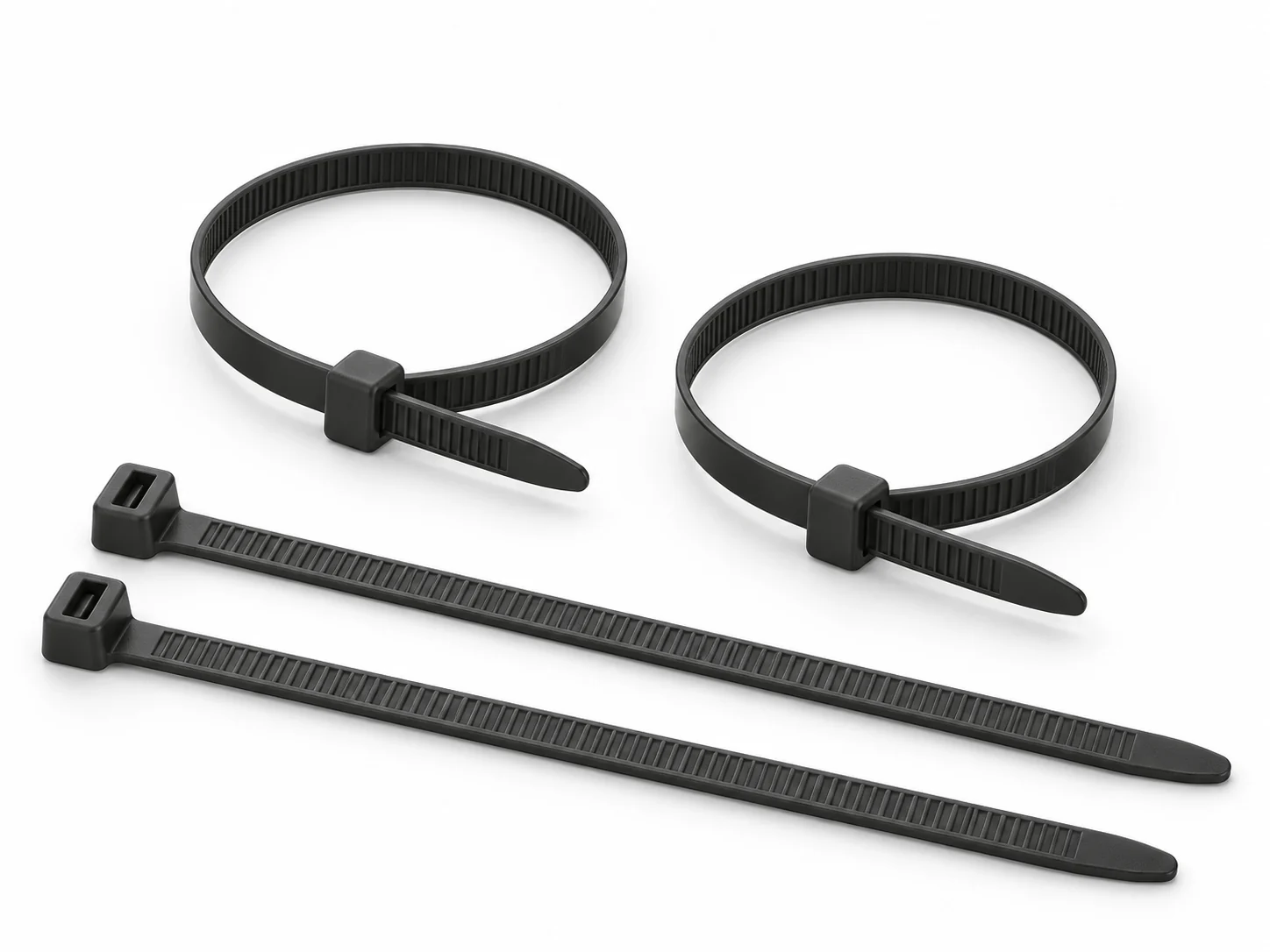
Cable ties for the outdoor PV sector
For bundling and attaching in the PV exterior area. Ask the required number with information about bundle size and location.
Request a quote: Cable ties for the outdoor PV sector
Characteristics and use: Cable ties for the outdoor PV sector
Operation
Cable ties bundle cables or attach them to suitable holding points. Designed, UV and weather resistant versions are used for outdoor PV systems. Black colour alone does not prove this suitability; the documented material and usage data are decisive.
Selection features
Length, width, permissible bundle diameter, holding force and temperature range are selected. The assembly must not tie in the cables or strain them on sharp edges. A binder does not replace a protective tube or a supporting structure suitable for the concrete load.
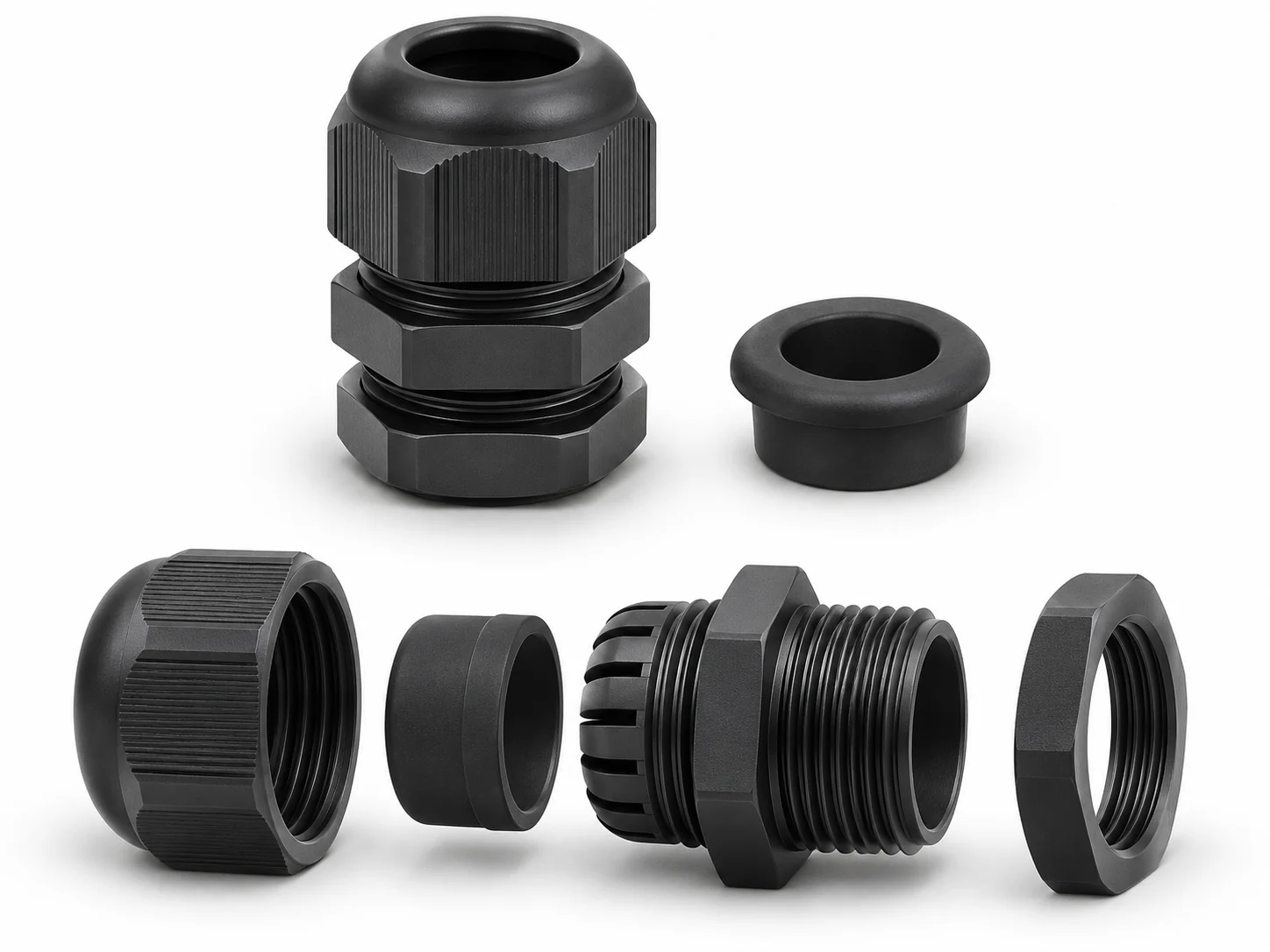
Cable fittings and fittings
For cable introductions in housing. Name cable diameter, existing opening and the desired task of execution.
Request a quote: Cable fittings and fittings
Characteristics and use: Cable fittings and fittings
Operation
Cable fittings lead cables into a housing and can seal and load depending on the design. For example, simple inserts are used for edge protection; they do not automatically provide the same sealing or strain relief. Both types are to be distinguished from electrical connectors.
Selection and limits
External cable diameter, sealing and clamping area, thread or opening, wall thickness and location must fit. The specified IP protection class applies to the intended, correctly mounted structure. For cables already equipped with plugs, a split introduction may be necessary. A housing fitting is not a flat-rate solution for a dense roof or wall passage.
Important terms simply explained.
UV and weather resistance
UV means ultraviolet solar radiation. For outdoor components, moisture, temperature and other local influences also count. The suitability results from the information on the concrete execution.
External cable diameter and internal diameter
The outer diameter includes the entire cable sheath. For a pipe, the usable inner diameter describes the space for the pipes. Both values must be distinguished from the cross-sectional surface of the electrical conductor in mm².
Bending radius
The radius with which a pipe or pipe is bent. The specified minimum bending radius must not be below the guide.
Clamping and sealing area
The size range for which a component is intended. In the case of cable clips, it can affect the profile edge or the cable; in the case of fittings, the cable diameter and the intended seal are decisive.
Discharge of train
A mechanical fixation that keeps tensile forces away from the electrical connections. A simple execution sleeve or loose cable guide does not perform this task automatically.
IP protection class
A marking of protection against contact, foreign objects and water. It refers to the structure tested for this purpose and describes neither UV resistance nor any roof sealing.
What does the selection matter?
Installation location, number of cables and outer cable diameters form the starting point. In addition, there are surface, profile dimensions, load and weather. Guides and fastenings must protect the cables and fit the existing module, assembly or housing system. The professional execution is planned for the entire line path.
This information will help us with your offer.
Give us the desired accessory type, the location and the required length or quantity. Photos and dimensions help even if the exact design is still open.
- Desired type of accessories and new equipment, addition or replacement
- Installation location, line path and conditions in indoor or outdoor areas
- Number of cables, outer cable diameter and required length or quantity
- Profile or edge dimensions, surface or housing opening; photos and documents, if available
Photos and existing documents can be added directly to the contact form.
Frequently asked questions.
Is every black cable tie suitable for outdoor PV systems?
No, no, no. The colour alone does not demonstrate UV or weather resistance. The documented operating conditions, the temperature range and the appropriate mechanical design are decisive. Tell us the location and the required scope.
Is a cable fitting also a finished roof passage?
A housing insertion and the implementation by roof or external wall are different tasks. Roof structure, sealing and existing components must be considered separately. Describe the transition and supplement photos or planning documents as possible.
Technical basis.
View Sources
The sources describe the tasks and requirements of the component types. Material, dimensions and assembly are coordinated for your PV system. The documents for the chosen execution and the technical installation planning are decisive.
DKE: Electrical installation channel systems – DIN EN 50085-1
DKE: Cable carrier systems – DIN EN 61537
DKE: Electrical installation pipe systems – DIN EN 61386-1
DKE: Cable ties for electrical installations – DIN EN IEC 62275
DKE: Cable fittings – DIN EN 62444
VDE Institute: Testing of cables, cables and management systems
Enquire cable guidance for your PV project.
Send us your needs. We agree guidance, fastening and executions with you and prepare your offer.